
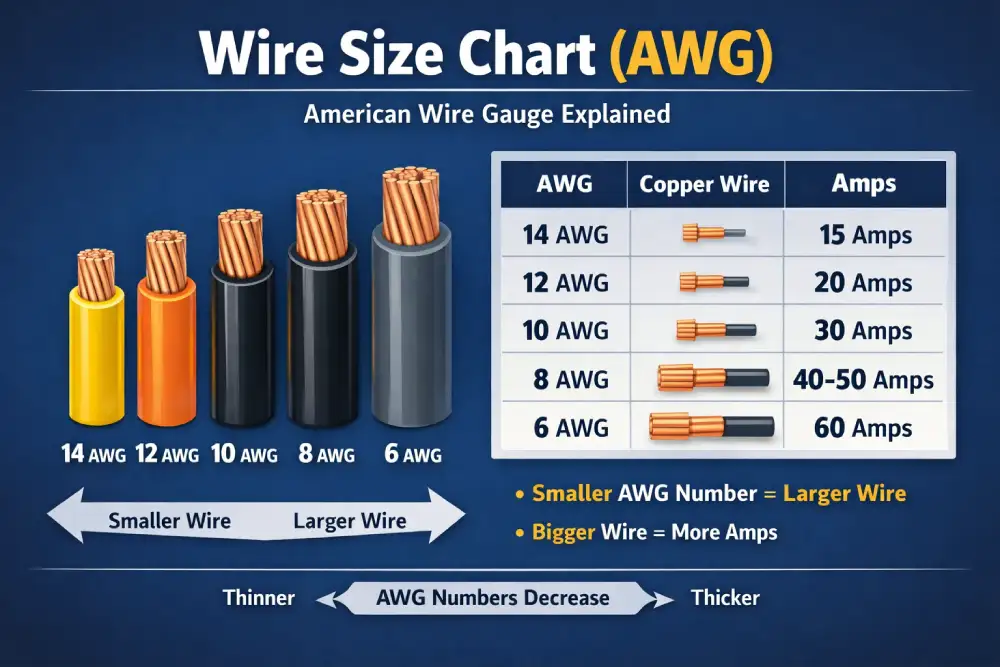
If you work around electrical systems long enough, you start hearing wire sizes constantly. Someone will say run twelve gauge. Someone else says we need six gauge for that feeder.
All of those sizes come from something called the American Wire Gauge system, usually shortened to AWG.
Once you understand how the chart works, it starts to make a lot more sense.
What the wire size chart actually shows
A wire size chart lists different conductor sizes and how much electrical current they can safely carry.
The chart also shows the physical diameter of the wire. Larger wires can carry more current because they have less electrical resistance.
Electricians use this information to match the wire size with the breaker size and the electrical load.
The weird part about AWG numbers
One thing that confuses people is that the numbers work backwards.
Smaller numbers mean bigger wires. Larger numbers mean smaller wires.
For example:
- 14 AWG is smaller than 12 AWG
- 12 AWG is smaller than 10 AWG
- 6 AWG is much larger than 12 AWG
It feels backwards at first but electricians get used to it quickly.
Common wire sizes electricians memorize
After a while you stop checking the chart for the most common branch circuits because you see them constantly.
- 14 AWG copper → 15 amp circuits
- 12 AWG copper → 20 amp circuits
- 10 AWG copper → 30 amp circuits
- 8 AWG copper → 40 to 50 amps
- 6 AWG copper → around 60 amps
Those sizes cover most residential circuits and small equipment loads.
Where the real numbers come from
The NEC does not just guess these numbers. The ampacity values come from testing that measures how much heat a conductor produces when current flows through it.
The main reference electricians use is NEC Table 310.16.
That table lists the safe ampacity for conductors based on insulation temperature rating and installation conditions.
Why wire size matters for safety
If a wire is too small for the amount of current flowing through it, it will heat up.
Too much heat can damage insulation and eventually create a fire risk.
That is why matching breaker size, conductor size, and load is one of the most important parts of electrical work.
The wire size chart is basically a quick reference that helps electricians make those decisions safely.
Wire size questions appear on almost every electrician exam
Electrician Practice drills the NEC tables and wire sizing rules that licensing exams test so you start recognizing the patterns quickly.