
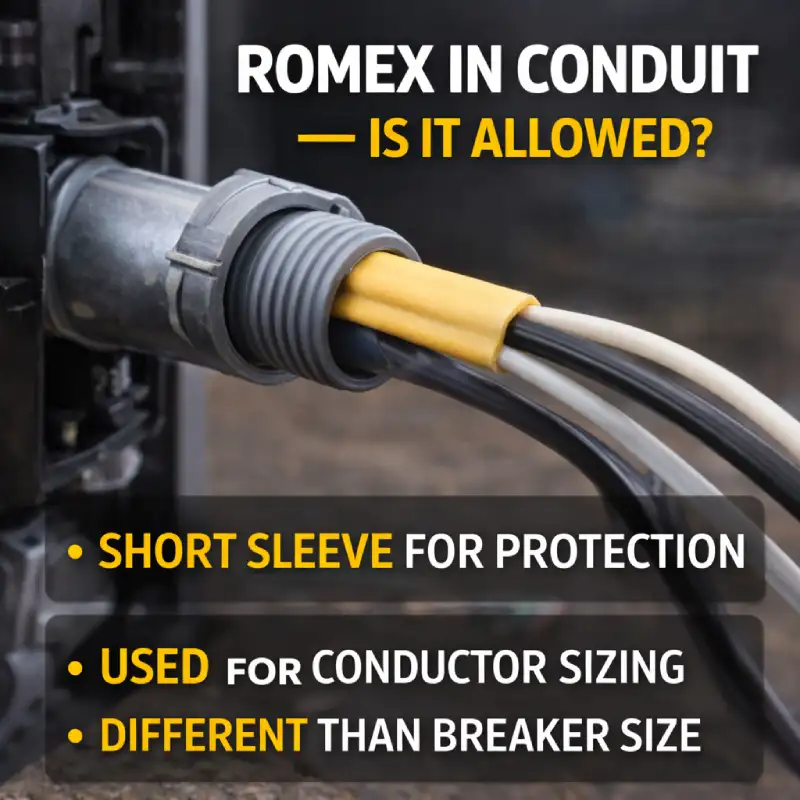
This is one of those electrical questions that sparks arguments on job sites all the time. Can you run Romex in conduit?
The short answer is yes, but only in certain situations.
The NEC does allow NM cable, commonly called Romex, to be installed inside conduit. But it is usually not the preferred method and there are a few things electricians need to watch out for.
Why electricians sometimes put Romex in conduit
Romex is designed to be installed inside walls, ceilings, and protected building cavities.
But sometimes the cable needs extra physical protection.
For example:
- When the cable runs down a wall in a garage
- When wiring is exposed in a basement
- When passing through masonry or concrete
In those cases, electricians may sleeve the Romex in a short section of conduit to protect it from damage.
Why long conduit runs with Romex are not common
Running Romex through long sections of conduit can create a few problems.
The outer jacket of NM cable takes up a lot of space, which makes conduit fill calculations harder.
Romex also does not dissipate heat as well inside conduit as individual THHN conductors do.
Because of that, most electricians prefer pulling individual conductors instead of running full NM cable inside conduit for long distances.
What the NEC actually allows
The NEC does not prohibit NM cable from being placed inside conduit.
However, the installation still has to follow other rules like:
- Conduit fill limits
- Protection from physical damage
- Proper cable support
That is why conduit sleeves are common, but full conduit runs with Romex are less typical.
The exam trick people miss
Licensing exam questions often test the difference between protection and wiring method.
If conduit is used only to protect exposed Romex for a short distance, it is generally acceptable.
But if the entire circuit is being run through conduit, electricians usually switch to individual conductors instead.
The easy way to remember it
- Short conduit sleeve for protection → usually fine
- Entire run in conduit → usually better to use THHN conductors
Understanding that difference helps avoid a lot of confusion about Romex in conduit installations.
Studying for the journeyman exam?
Electrician Practice helps you understand NEC wiring rules, conduit rules, and conductor sizing with realistic exam questions and clear explanations.