
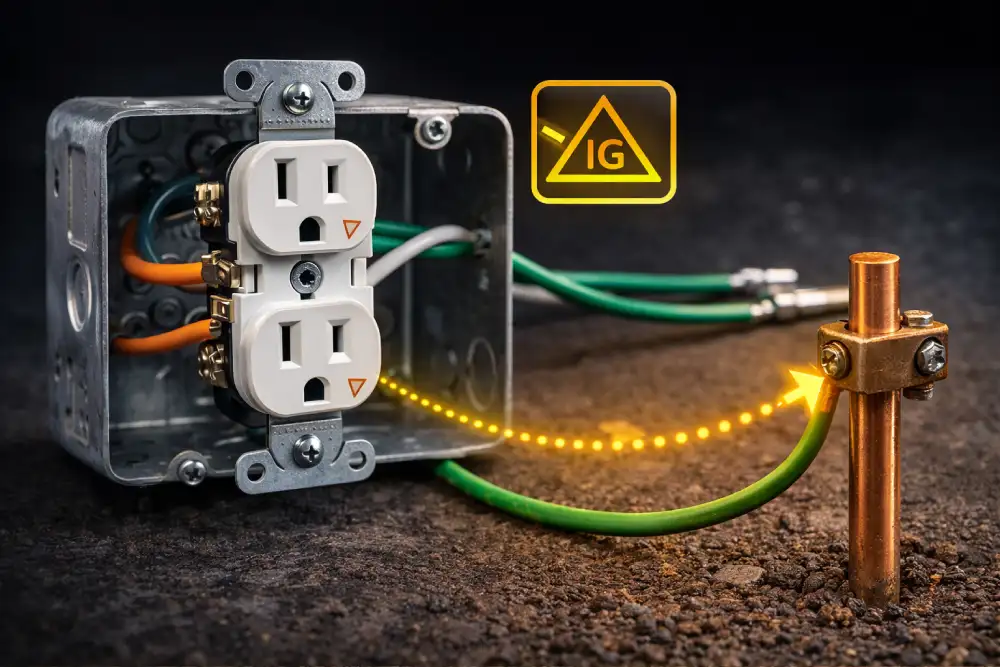
If you have ever seen a receptacle with a little orange triangle on the face of it, that is an isolated ground receptacle. Most electricians have installed them but not everyone knows exactly what is going on behind the wall when they do.
The basic idea
A normal receptacle has its ground terminal bonded to the metal box and the conduit system. That means the ground path picks up everything connected to it, other equipment, the conduit, the box, all of it.
In most situations that is totally fine. But for sensitive electronic equipment like computers, medical devices, or audio equipment, all that other stuff connected to the same ground can introduce electrical noise. That noise shows up as interference and can cause problems with the equipment.
An isolated ground fixes that by running a dedicated ground wire straight back to the panel, bypassing all the metal boxes and conduit along the way. The ground terminal on the receptacle is isolated from the box itself, which is where the name comes from.
How it is wired
With a standard receptacle the ground wire bonds to the box. With an isolated ground receptacle, the ground wire skips the box completely and runs all the way back to the panel on its own.
The metal box still needs to be grounded normally for safety. That part does not change. The isolated ground conductor is a separate wire that only connects at the receptacle on one end and the panel on the other.
Where you see them used
Isolated ground receptacles show up in places where electrical noise is a real concern.
- Computer rooms and server areas
- Medical offices and hospitals
- Recording studios
- Any location with sensitive electronics that are picking up interference
A lot of the time it is the equipment manufacturer or the building designer who specifies them, not something an electrician decides on their own.
The NEC on isolated grounds
Isolated ground receptacles are covered under NEC 250.146(D).
The code allows the ground terminal of a receptacle to be isolated from the box as long as the isolated ground conductor runs back to the panel or other equipment grounding conductor termination point.
The receptacle itself has to be identified with the orange triangle marking so anyone working on it later knows it is an isolated ground installation.
One thing that trips people up
A lot of people assume an isolated ground means the equipment is floating or ungrounded. It is not. The equipment is still grounded, it just has a cleaner, dedicated path back to the panel without picking up noise from everything else on the way.
Safety is still maintained. It is just a quieter ground path.
The quick version to remember
- Isolated ground receptacles have the ground terminal isolated from the metal box
- A dedicated ground wire runs straight back to the panel to reduce electrical noise
- The box still gets grounded normally for safety
- Covered under NEC 250.146(D)
- Identified by the orange triangle on the receptacle face
Studying for the journeyman exam?
Electrician Practice covers grounding, bonding, NEC code rules, and everything else on the exam with realistic practice questions and clear explanations.