
If you spend enough time around electricians you will hear two words over and over. Grounding and bonding.
People sometimes use them like they mean the same thing, but they do not. They are related, but they solve different problems in an electrical system.
Once you see the difference, it actually becomes pretty simple.
What grounding actually means
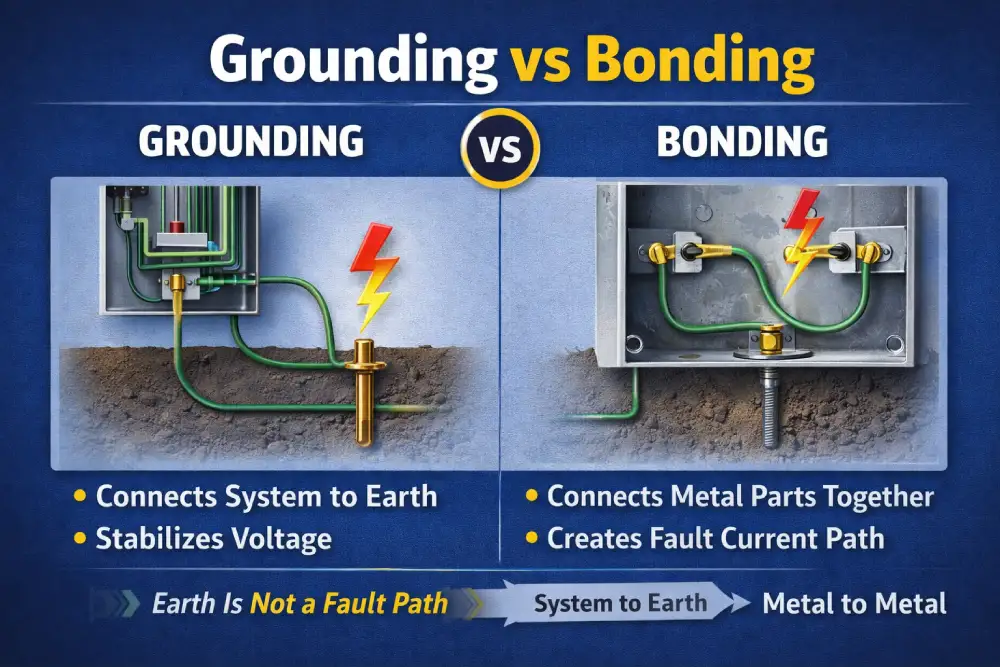
Grounding connects part of the electrical system to the earth.
That usually means a grounding electrode like a ground rod, metal water pipe, or concrete encased electrode. The purpose is to stabilize voltage and give lightning or surge energy somewhere to go.
Think of grounding as connecting the electrical system to the planet.
It is not there to clear a normal fault on a branch circuit. A lot of people assume that, but the earth is actually a pretty poor conductor.
What bonding actually means
Bonding is about connecting metal parts together so they stay at the same electrical potential.
That includes metal boxes, conduit, panel enclosures, and equipment frames.
If a hot wire touches a metal enclosure, bonding gives that fault current a low resistance path back to the source.
When that happens, the breaker trips quickly and the fault clears.
Why both are required
The electrical system needs both of these working together.
Grounding helps stabilize voltage and deal with things like lightning or utility surges. Bonding is what allows breakers and fuses to actually clear faults.
If metal parts were not bonded together, a fault could energize equipment and leave it sitting there waiting for someone to touch it.
That is exactly the kind of situation the NEC is trying to prevent.
Where people get confused on exams
Electrician licensing exams love this topic because the wording can be tricky.
A lot of test questions try to see if you know the real purpose of grounding versus bonding.
The key thing to remember is this.
- Grounding connects the system to earth
- Bonding creates a fault current path
If you keep those two ideas straight, most exam questions on this topic become pretty easy.
Grounding and bonding show up on almost every electrician exam
Electrician Practice drills the NEC concepts and tables that licensing exams love to test so you start recognizing patterns instead of guessing.