
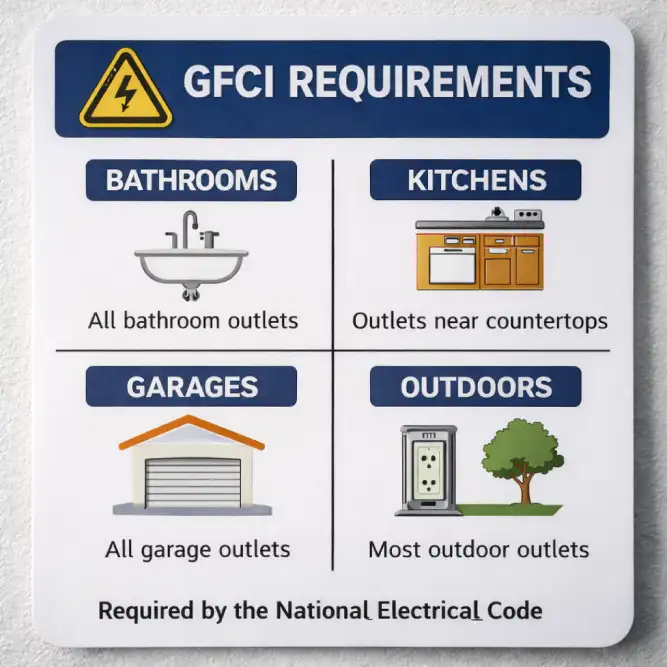
If you work in residential electrical long enough, you start hearing the same question constantly. Does this need to be GFCI protected?
The short answer is the NEC requires GFCI protection in areas where electricity and water are likely to meet. That rule mostly lives in NEC 210.8.
Once you understand the logic behind the rule, remembering the locations becomes much easier.
What GFCI protection actually does
A GFCI protects people from electrical shock.
It monitors the current leaving the hot conductor and compares it to the current returning on the neutral. If there is a small difference, the device assumes electricity is leaking somewhere and trips instantly.
That leak might be going through water, through a damaged tool, or through a person.
Main residential locations that require GFCI
NEC 210.8 lists several locations where receptacles must have GFCI protection. These are the ones electricians deal with most often.
- Bathrooms
- Kitchens near sinks
- Garages
- Outdoor receptacles
- Basements
- Laundry areas
If water is nearby or the environment increases the risk of shock, the NEC usually wants GFCI protection.
Kitchen GFCI requirements
Kitchens are one of the most common places people get confused.
The code requires GFCI protection for receptacles that serve countertop surfaces. That means the outlets where small appliances like coffee makers, blenders, and toasters get plugged in.
If the receptacle is within about six feet of a sink, GFCI protection is typically required as well.
Outdoor GFCI requirements
Outdoor receptacles almost always require GFCI protection. Rain, wet ground, and extension cords create a perfect environment for electrical shock hazards.
Because of that risk, the NEC requires outdoor outlets on homes to be GFCI protected.
How electricians actually install GFCI protection
There are a few common ways electricians provide GFCI protection.
- Install a GFCI receptacle at the first outlet in the circuit
- Use a GFCI breaker in the panel
- Protect downstream outlets from a single GFCI device
All of these methods accomplish the same goal. They shut off power when a dangerous ground fault occurs.
The exam trick people miss
Journeyman exam questions often test whether you understand the location requirement, not just the device itself.
For example, they may describe a receptacle near a sink or in a garage and ask what protection is required. If water or ground exposure is involved, the answer is usually GFCI.
Studying for the journeyman exam?
Electrician Practice helps you learn NEC code rules like GFCI requirements with realistic exam questions, timed quizzes, and clear explanations.