
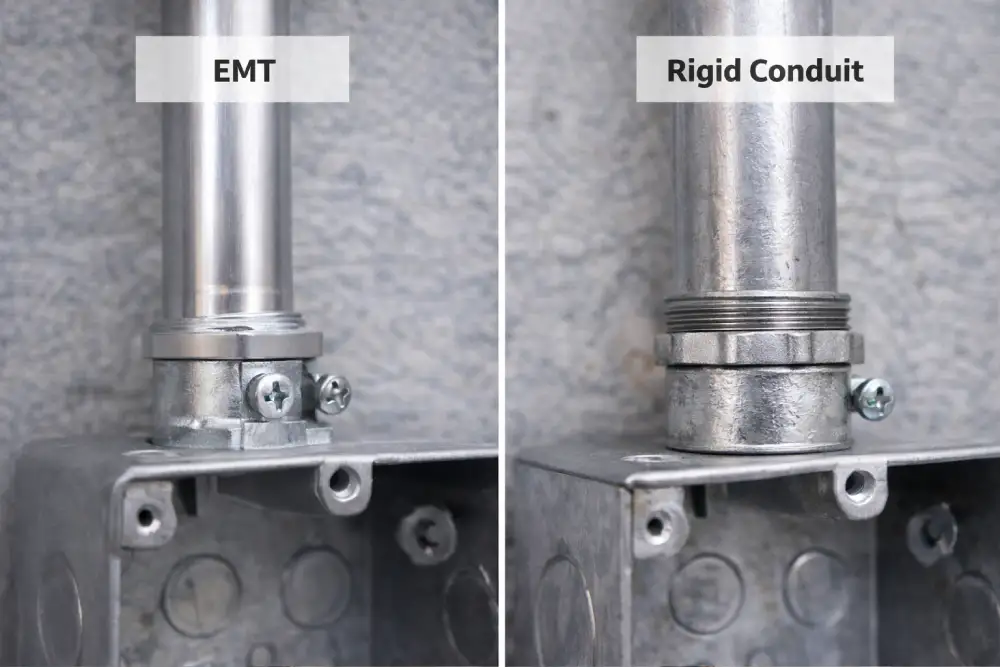
The difference between EMT vs rigid conduit comes up a lot in electrical work. Sometimes it shows up on job sites. Sometimes it shows up on licensing exams.
And honestly, the question behind it is pretty simple. When do you use EMT and when do you use rigid conduit.
Both protect conductors. Both are metal raceways. But they behave very differently in the real world.
What EMT conduit is
EMT stands for electrical metallic tubing. Most electricians just call it EMT or thin wall.
It is lightweight, easy to bend, and very common in commercial electrical work.
You can bend EMT with a standard hand bender, which is one of the reasons it gets used so often for interior work.
- Lightweight
- Easy to bend
- Common in commercial interiors
If you have ever seen rows of conduit neatly bent along a wall in a commercial building, chances are you were looking at EMT.
What rigid conduit is
Rigid conduit is much thicker and heavier. The official name in the NEC is rigid metal conduit, usually called RMC.
It is extremely durable and designed for tougher environments.
Unlike EMT, rigid conduit is threaded and uses threaded fittings.
- Very strong
- Threaded connections
- Used in harsh environments
Because of how tough it is, rigid conduit is often used outdoors, underground, or in places where physical damage is possible.
The biggest difference electricians notice
The biggest difference between EMT and rigid conduit is durability.
EMT is lighter and easier to work with, but it is not nearly as strong as rigid conduit.
Rigid conduit is built for situations where the raceway might take a beating.
That is why you often see rigid conduit used where conduit comes out of the ground or where equipment might bump into it.
Installation differences
EMT installs quickly because it bends easily and uses compression or set screw fittings.
Rigid conduit takes more work. It is thicker, heavier, and usually requires threading tools or pre threaded conduit.
So while rigid conduit is tougher, EMT usually wins when speed and convenience matter.
Where each one is commonly used
If you walk through a typical commercial building, you will probably see EMT everywhere.
It works great for interior walls, ceilings, and exposed conduit runs where the environment is controlled.
Rigid conduit shows up more often in places like:
- Service entrances
- Outdoor installations
- Underground runs
- Areas where conduit could be damaged
Basically anywhere you want the strongest protection possible.
What exams usually test
Electrical exams rarely ask you to memorize every tiny conduit rule. Instead they usually test whether you understand the practical difference.
Questions often focus on which raceway is stronger, which one is threaded, and which one bends easily.
If you remember that EMT is lightweight and rigid conduit is heavy duty, you can usually work your way through the question.
The bar version
If you want the simple explanation, here it is.
EMT is light, easy, and common indoors. Rigid conduit is heavier, stronger, and used where things can get rough.
Same basic job. Different level of protection.
Conduit questions show up a lot on electrician exams
Electrician Practice helps you drill conduit types, NEC rules, wire sizing, and the code topics that show up over and over on licensing tests.