
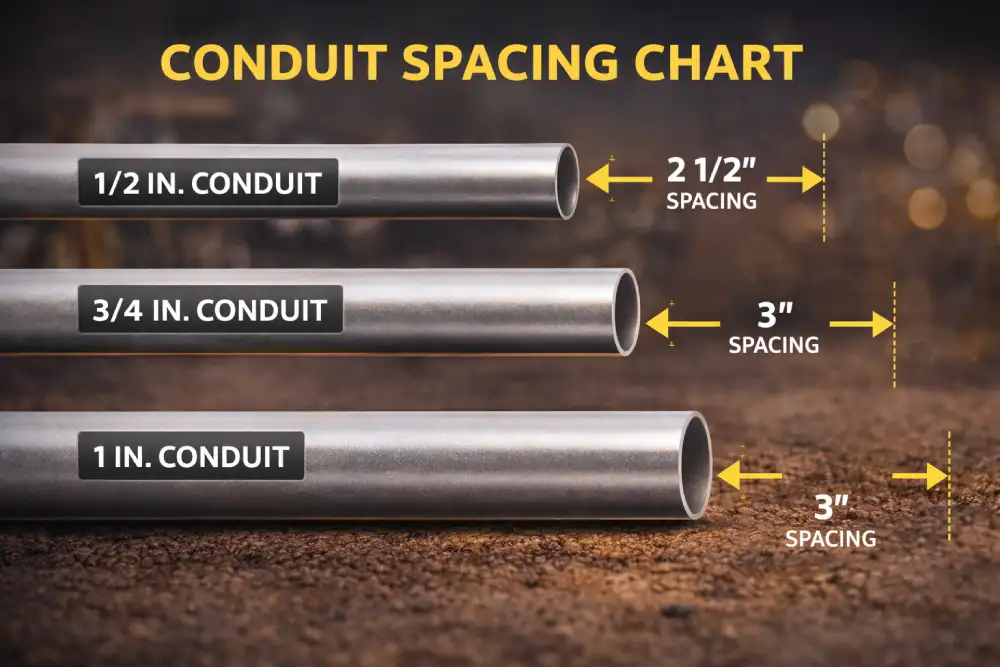
Conduit support spacing is one of those things that is easy to eyeball wrong in the field and easy to get wrong on the exam too. The NEC has specific requirements for how far apart your straps and supports need to be, and they are different depending on what type of conduit you are running.
Why support spacing matters
Conduit that sags between supports looks bad, but more importantly it can stress the fittings and connections over time. The NEC sets maximum spacing between supports to keep the conduit secure and the system looking and performing the way it should.
The type of conduit matters a lot here. Rigid metal conduit is stiff and heavy and can span further between supports. PVC is flexible and will sag if you space supports too far apart, so it needs more frequent support especially in warmer environments where it softens up a bit.
EMT support spacing
Electrical metallic tubing is probably the most common conduit in commercial work. The NEC requires EMT to be supported:
- Within 3 feet of every box, cabinet, or termination point
- At intervals not exceeding 10 feet along the run
So if you are running EMT across a ceiling, you need a strap within 3 feet of where it enters every junction box, and then a strap at least every 10 feet in between.
RMC and IMC support spacing
Rigid metal conduit and intermediate metal conduit follow a different spacing chart based on conduit size. The bigger the conduit, the further apart supports can be.
- 1/2 inch and 3/4 inch RMC: every 10 feet
- 1 inch RMC: every 12 feet
- 1-1/4 inch and 1-1/2 inch RMC: every 14 feet
- 2 inch and 2-1/2 inch RMC: every 16 feet
- 3 inch and larger RMC: every 20 feet
RMC also needs to be supported within 3 feet of every box or termination point, same as EMT.
PVC conduit support spacing
Schedule 40 and Schedule 80 PVC conduit has its own spacing requirements and they are tighter than metal conduit because PVC does not have the same rigidity.
- 1/2 inch through 1 inch PVC: every 3 feet
- 1-1/4 inch through 2 inch PVC: every 5 feet
- 2-1/2 inch through 3 inch PVC: every 6 feet
- 3-1/2 inch through 5 inch PVC: every 7 feet
- 6 inch PVC: every 8 feet
PVC also needs support within 3 feet of every box and on both sides of every coupling. In hot environments PVC expands noticeably, which is another reason keeping it well supported matters.
The termination rule everyone forgets
No matter what conduit type you are running, the 3 foot rule at boxes and terminations is the one that trips people up most often on the exam and in the field.
Picture conduit dropping down from a ceiling into the top of a panel. That conduit needs a strap within 3 feet of where it enters the panel. A lot of guys get so focused on the spacing along the run that they miss the support right at the termination point.
The quick version to remember
- EMT: within 3 feet of boxes, every 10 feet along the run
- RMC and IMC: within 3 feet of boxes, then every 10 to 20 feet depending on size
- PVC: within 3 feet of boxes, every 3 to 8 feet depending on size
- Bigger conduit can span further between supports
- PVC needs more frequent support than metal conduit
Studying for the journeyman exam?
Electrician Practice covers conduit systems, NEC support requirements, wiring methods, and everything else on the exam with realistic practice questions and clear explanations.