
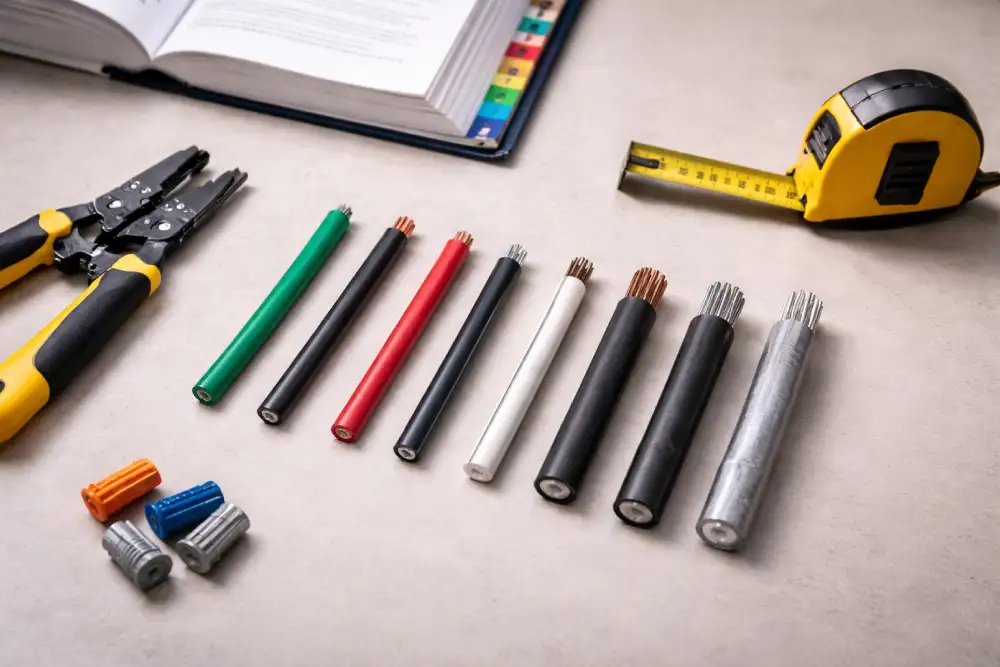
If you have spent any time around electrical work, you know that wire size and ampacity come up constantly. People usually want a quick answer. What size wire do I need for this breaker.
The answer comes from the NEC ampacity tables. These tables tell you how much current a conductor can safely carry without overheating.
Once you understand the basic pattern, most wire sizing questions start to feel pretty predictable.
The basic idea behind ampacity
Ampacity is simply the maximum current a conductor can safely carry. When too much current flows through a wire it heats up. If that heat builds up too much it can damage insulation or create a fire hazard.
That is why the NEC provides tables that match conductor size with safe current limits.
Why copper and aluminum are different
Copper conducts electricity better than aluminum. Because of that, copper can carry more current in the same size wire.
Aluminum is cheaper and lighter though, which is why it is still used for feeders and service conductors. The tradeoff is that aluminum conductors usually need to be a larger size to carry the same load.
A common example electricians remember is a 100 amp feeder.
- 3 AWG copper
- 1 AWG aluminum
Same breaker size, different conductor size because the materials behave differently.
Where the NEC ampacity numbers come from
The main reference is NEC Table 310.16. This table lists the allowable ampacity of insulated conductors based on their temperature rating.
The table is divided into three temperature columns.
- 60°C
- 75°C
- 90°C
Most modern equipment and breakers are rated for the 75°C column, so that is usually the column electricians use when sizing conductors.
Common ampacity values electricians memorize
After a while you stop looking at the table for the most common sizes because they show up constantly.
- 14 AWG copper → 15 amp circuits
- 12 AWG copper → 20 amp circuits
- 10 AWG copper → 30 amp circuits
- 8 AWG copper → 40 to 50 amps
- 6 AWG copper → 60 amps
Those sizes cover most residential branch circuits and small feeder runs.
Where people get tripped up on exams
Licensing exams love ampacity questions because they test whether you know where to look in the code book.
The common mistakes are using the wrong temperature column or forgetting that aluminum wire must be sized larger than copper.
Once you know which NEC table to use and which column applies, the question becomes a quick lookup instead of a guessing game.
Ampacity questions show up constantly on electrician exams
Electrician Practice drills the NEC tables that appear most often on licensing tests so you start recognizing the patterns instead of flipping through the code book every time.